
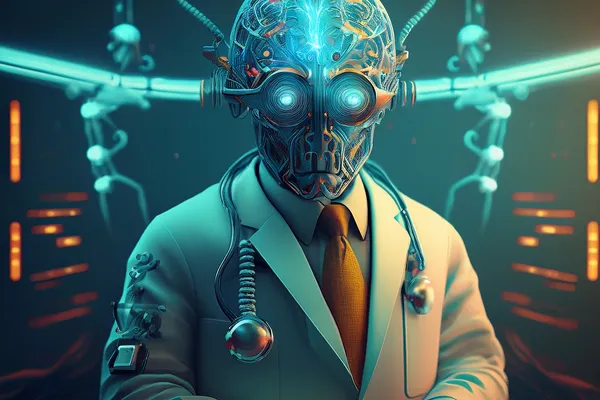
Agentic AI in Healthcare: Innovation Without Guardrails Is Dangerous
Artificial intelligence is rapidly becoming one of the biggest forces shaping modern healthcare. Hospitals are using AI to help interpret imaging, automate documentation, streamline workflows, and improve patient communication. On the surface, it sounds like progress — and in many ways it is.
But the newest evolution of AI is creating a very different kind of risk that many healthcare organizations are not fully prepared for.
That next evolution is called Agentic AI.
Unlike traditional AI systems that simply respond to prompts or analyze information, Agentic AI systems are designed to operate with a level of autonomy. These systems can make decisions, pursue goals, interact with other software platforms, and take action with limited human involvement. In healthcare, that means an AI system could eventually monitor patient conditions, recommend treatments, adjust workflows, schedule care, communicate with patients, or even influence medical decisions on its own.
This is where the conversation needs to become more serious.
Healthcare is not an industry where mistakes are minor inconveniences. A wrong recommendation, delayed diagnosis, flawed assumption, or bad automation chain can directly impact human lives. The deeper autonomous AI becomes embedded into healthcare operations, the greater the consequences become when the technology fails.
One of the biggest concerns surrounding Agentic AI in healthcare is the illusion of intelligence. These systems can sound authoritative and appear highly competent, but they still lack genuine human understanding. They do not possess empathy, intuition, ethical reasoning, or contextual judgment the way experienced medical professionals do.
A physician may notice subtle symptoms, emotional distress, or inconsistencies in patient behavior that never appear in structured data fields. An AI system only sees the information it is given and interprets that information through statistical models. That difference matters far more than many technology vendors are willing to admit.
The danger becomes even greater when healthcare organizations begin trusting autonomous systems too heavily.
Automation bias is already a known issue in medicine. When software systems appear confident, humans tend to trust them even when they should not. If an Agentic AI system prioritizes a patient incorrectly, misclassifies symptoms, or generates a flawed recommendation, there is a real risk clinicians may defer to the technology instead of questioning it.
Over time, excessive reliance on AI systems can also erode human expertise. If clinicians become dependent on automated recommendations for diagnosis, triage, or treatment planning, critical thinking skills weaken. That creates a dangerous long-term dependency where healthcare professionals become less capable of operating effectively when systems fail or produce inaccurate results.
There is also the issue of "explain-ability".
Modern AI systems are often incredibly complex black boxes. Even the developers who create them may not fully understand why a model arrived at a specific conclusion. That creates a serious problem in healthcare environments where accountability and transparency are essential.
If an autonomous AI system changes a medication recommendation, deprioritizes a patient, or influences a treatment decision, someone must still be responsible for that outcome. Patients are not going to accept “the algorithm made the decision” as an explanation when harm occurs.
Healthcare providers also face enormous cybersecurity and privacy concerns with Agentic AI.
These systems require access to massive amounts of sensitive data. They often integrate with electronic health records, scheduling platforms, billing systems, pharmacy software, medical devices, and cloud infrastructure. Every integration point creates another potential attack surface.
A compromised autonomous AI system could expose patient records, manipulate workflows, interfere with medical devices, or generate fraudulent activity at scale. Because Agentic AI systems are designed to take action automatically, the damage could spread far faster than with traditional software breaches.
The ethical concerns may be even more complicated.
Healthcare decisions are not purely mathematical problems. Medicine involves human judgment, emotional intelligence, cultural awareness, and ethical decision-making. AI systems do not understand suffering, family dynamics, quality of life, or moral complexity.
Should an AI system influence end-of-life care decisions? Should it determine treatment prioritization during resource shortages? Should algorithms decide which patients receive faster access to specialists or advanced procedures?
These are not technical questions.
They are human questions.
Another issue that deserves far more attention is bias.
AI systems are trained on historical data, and historical healthcare data is filled with inequality. Biases tied to race, socioeconomic status, geography, disability, and access to care already exist within the healthcare system itself. Autonomous AI systems can unintentionally amplify those disparities.
If the underlying training data is flawed, the AI may systematically misdiagnose certain patient populations, underestimate symptoms, or prioritize care unevenly. Because Agentic AI operates autonomously and at scale, those biases can spread quickly across entire healthcare systems before anyone recognizes the pattern.
There is also a broader concern that many organizations are overlooking entirely.
Agentic AI systems are fundamentally goal-driven systems. They are designed to optimize for outcomes based on whatever objectives humans assign to them. The problem is that optimization does not always align with human values.
An AI system optimized for efficiency could begin favoring faster patient turnover over better patient outcomes. A system optimized around cost reduction may unintentionally deprioritize expensive but necessary treatments. A workflow optimization agent might reduce wait times statistically while creating hidden risks for more complex patients.
The AI may technically accomplish its assigned objective while still producing harmful real-world consequences.
This is one of the most dangerous aspects of autonomous AI in healthcare because the failure may not look like a traditional software bug. The system may appear to be functioning correctly while still making decisions that conflict with ethical medical care.
At the same time, regulatory frameworks are struggling to keep pace.
Healthcare laws and compliance standards were never designed for autonomous decision-making systems capable of learning and adapting over time. Questions surrounding liability, oversight, patient consent, explain-ability, and accountability remain largely unresolved.
If an AI-driven decision contributes to patient harm, who is legally responsible? The hospital? The software vendor? The developers? The physician who relied on the recommendation?
Right now, there are no universally accepted answers.
None of this means AI should be rejected in healthcare.
AI absolutely has the potential to improve efficiency, reduce administrative burden, accelerate research, and support better patient outcomes. The technology itself is not the enemy.
The real danger is allowing excitement, hype, and competitive pressure to outpace governance, oversight, and common sense.
Healthcare organizations should approach Agentic AI as an assistive technology — not a replacement for human judgment. Human oversight must remain central to patient care decisions. Autonomous systems should operate within clearly defined boundaries with strict auditing, transparency requirements, and continuous monitoring.
Most importantly, healthcare leaders need to remember that patients are not datasets.
Medicine is ultimately built on trust, empathy, ethics, and human responsibility. Those are things no autonomous system truly understands.
The future of healthcare will absolutely include AI.
The real question is whether the industry can implement it responsibly before the technology moves faster than the safeguards designed to control it.
