
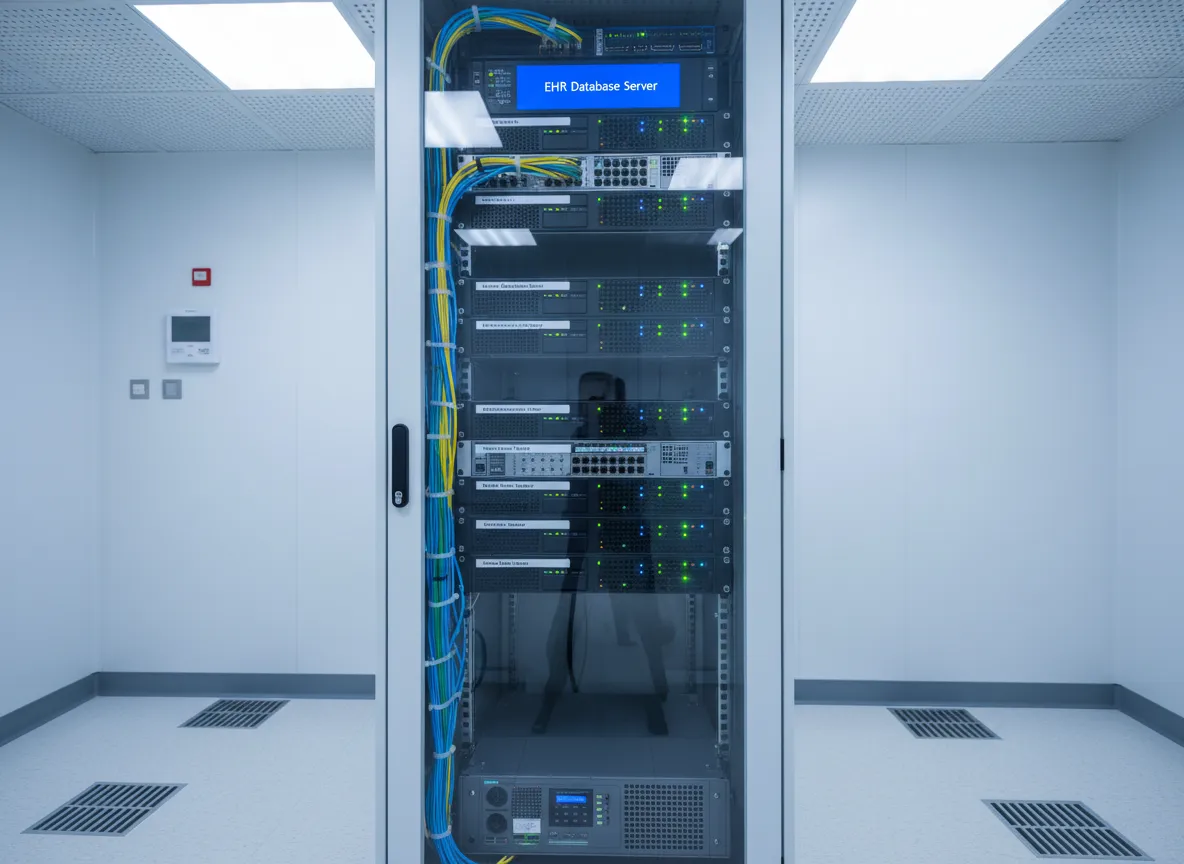
Hardware Refresh Cycles for EHR Environments
Hardware refresh cycles are often treated as a budgeting or performance issue. In EHR environments, I treat them as a security and compliance concern as well.
Workstations, servers, and network devices that support electronic health record workflows age in predictable ways. Performance declines, vendor support expires, and security exposure increases. When practices delay refresh decisions, I frequently see the same outcomes: unplanned downtime, rushed purchases, and avoidable HIPAA risk. The objective is not constant upgrading. The objective is controlled, deliberate lifecycle management.
Why EHR Environments Require a Different Lens
EHR environments place sustained, daily demand on hardware. Unlike general office systems, EHR workstations and servers operate under near-constant load during clinic hours and depend heavily on reliable disk, memory, and network performance. These systems are tightly integrated into clinical workflows.
When hardware begins to degrade, staff often compensate quietly. Screens take longer to load, applications require frequent restarts, and workflows slow down incrementally. By the time leadership notices, productivity has already been impacted. From a HIPAA perspective, aging hardware introduces additional risk. Once vendor support ends, firmware and driver updates stop, and known vulnerabilities remain unaddressed.
Establishing Realistic Hardware Refresh Timelines
While no two environments are identical, I use baseline timelines to guide planning for small to mid-sized practices. Clinical workstations and front-desk systems typically remain viable for four to five years. Laptops used for remote access or administrative work tend to require replacement sooner, usually within three to four years. On-premise servers often fall into a five- to seven-year window, though high storage or performance demands can shorten that range. Network firewalls and core switches usually age out around five to six years.
These timelines assume the hardware was appropriately specified and well maintained from the start. Underpowered systems rarely reach their expected lifespan. I also caution against using “it still turns on” as a decision metric. Vendor support status and the ability to receive security updates matter far more than perceived usability.
Aligning Hardware With Operating System and Software Support
Hardware refresh planning must align with operating system and application support cycles. I regularly see practices attempt to extend hardware life beyond the point where it can safely support supported software. A workstation that cannot run a current, supported version of the operating system creates an ongoing compliance issue. Servers nearing end-of-life may not support modern encryption standards or security controls, even if they are still functioning. In many cases, firmware and driver support ends well before physical failure occurs.
If the operating system cannot be maintained properly, I consider the hardware overdue for replacement, regardless of whether it appears to function adequately.
Prioritizing Systems That Handle ePHI
Not all hardware carries the same level of risk. I prioritize refresh planning for systems that directly interact with electronic protected health information. This includes clinical workstations accessing EHR systems, servers that store or process ePHI, devices that provide remote access, and backup and recovery infrastructure.
Backup hardware is particularly easy to overlook. I often encounter aging backup systems that fail silently or cannot restore data within acceptable timeframes. These failures create both operational disruption and compliance exposure. A risk-based approach ensures that limited budget is spent where it reduces the most exposure.
Documenting Refresh Decisions as Risk Management
HIPAA does not require the newest hardware. It requires reasonable and appropriate safeguards. When a practice defers replacement, I document the decision clearly. That documentation should explain why the system is still considered acceptable, what compensating controls are in place, and when the system will be reevaluated.
This record demonstrates active risk management rather than neglect. It also supports predictable budgeting. Unplanned hardware failures are almost always more expensive than scheduled refreshes, both financially and operationally.
Making Hardware Lifecycle Management Ongoing
I treat hardware refresh planning as a recurring process, not a reaction to failure. An effective approach includes an accurate hardware inventory, known replacement timelines, budget forecasting, and coordination with software and security requirements. Practices that manage lifecycle proactively experience fewer disruptions and maintain stronger control over their security posture.
Conclusion: Stability Comes From Planning, Not Luck
In EHR environments, hardware reliability directly affects patient care, staff efficiency, and data security. A structured hardware refresh cycle reduces risk, prevents emergency spending, and supports HIPAA-aligned operations. Most importantly, it allows practices to make decisions deliberately, before aging hardware forces them into reactive choices. If you are unsure where your current environment stands, I encourage you to contact me for a consultation so we can review your hardware lifecycle, identify hidden risk, and build a refresh strategy that supports long-term stability rather than short-term fixes.
