
In-House IT vs. Managed IT in Healthcare: A Comparison for Medical and Dental Practices
The real question for a medical or dental practice is not whether IT support is necessary. I find that the more important question is how that support should be structured.
The decision between in-house IT and managed IT services directly affects cost control, reliability, security posture, and HIPAA risk. There is no universal right answer. The right choice depends on practice size, operational complexity, and tolerance for risk. My goal is always to help practices understand the trade-offs clearly before committing to a model.
Understanding the In-House IT Model
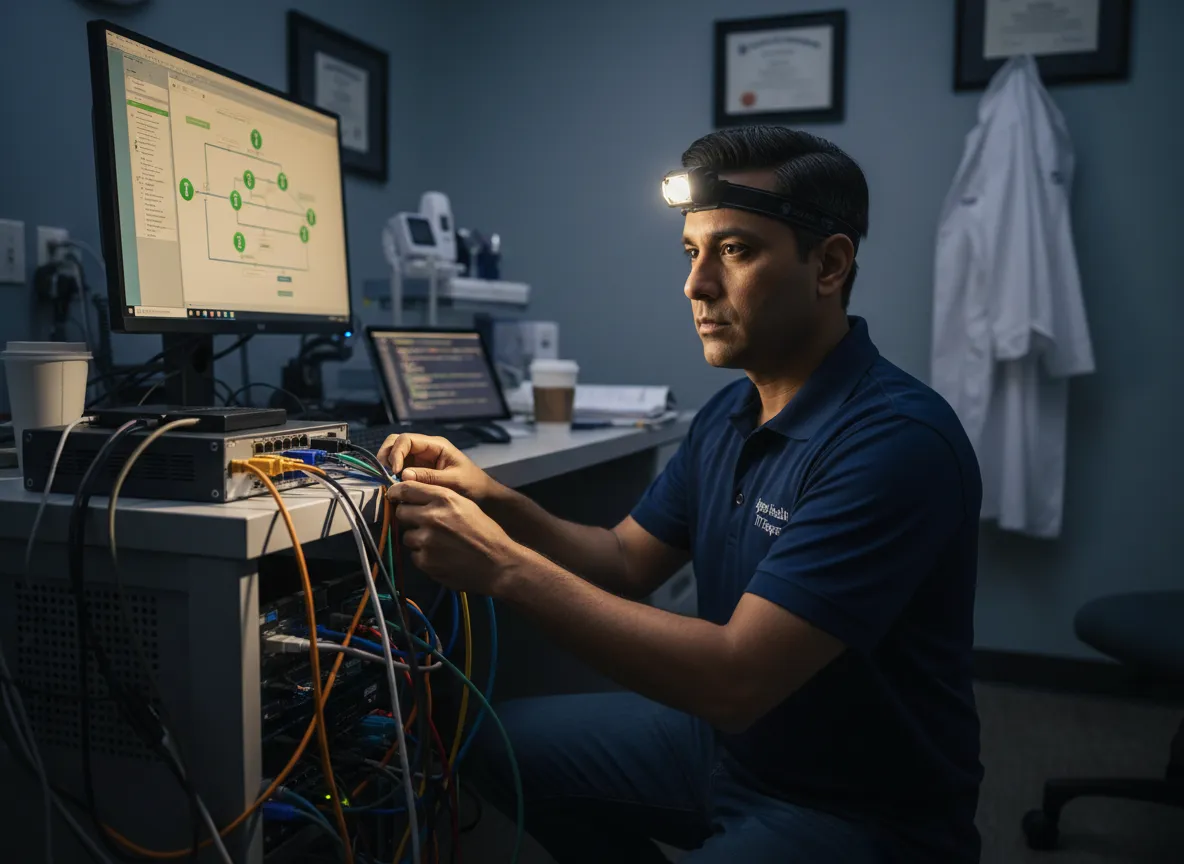
When I refer to in-house IT, I mean one or more dedicated employees responsible for day-to-day technology operations. This model offers some clear advantages. On-site presence allows for immediate response, familiarity with staff and workflows improves efficiency, and internal control over priorities can be appealing. For larger practices or multi-location organizations, in-house IT can work well when it is properly supported and resourced.
However, I also see consistent limitations with this approach. Single-person dependency is extremely common, which creates risk during vacations, illness, or turnover. Coverage gaps are almost inevitable. Just as importantly, healthcare IT now requires expertise across networking, security, backups, endpoint management, email protection, and compliance. Expecting one person to stay current and effective in all of these areas is unrealistic and risky. Even practices with in-house IT often need external support for security oversight and compliance guidance.
What Managed IT Services Bring to the Table
Managed IT services involve outsourcing support to a provider under a recurring service model. I often see this approach benefit small to mid-sized practices that need broader coverage without building a full internal team. Managed services can offer predictable monthly costs, access to specialized security tools, continuous monitoring, and reduced reliance on a single individual. These capabilities are often difficult or cost-prohibitive to maintain internally.
That said, not all managed IT providers are equal. I regularly encounter quality gaps between providers. Some rely heavily on junior helpdesk staff, apply generic service models, or lack meaningful healthcare experience. Without explicit senior-level oversight, practices may receive reactive support rather than strategic guidance. Healthcare environments require more than basic IT support, and providers who treat them like standard small businesses introduce unnecessary risk.
Why Many Practices End Up Hybrid
In reality, I see many healthcare organizations adopt a hybrid model. Internal staff handle daily user support and workflow-specific tasks, while external providers manage infrastructure, security controls, and compliance direction. This structure can reduce risk while preserving institutional knowledge. The success of a hybrid approach depends entirely on clear role definition, accountability, and communication. Without that clarity, responsibility gaps quickly emerge.
How I Evaluate IT Support Models
When I help practices compare in-house and managed IT, I focus on a few critical areas. I look closely at who owns security monitoring, risk assessments, and remediation, and how that accountability is documented. I assess whether senior-level expertise is actually involved or if support is primarily reactive. I examine continuity and coverage, especially what happens when key personnel are unavailable. Scalability matters as well, along with transparency around responsibilities, limitations, and scope. These factors matter far more than job titles or service labels.
Looking Beyond Salary Versus Monthly Fees
Cost comparisons often oversimplify the decision. In-house IT costs extend well beyond salary and include benefits, payroll taxes, training, certifications, tooling, and the risk of turnover or coverage gaps. Managed IT costs must be evaluated based on scope, security coverage, level of senior oversight, responsiveness, and accountability. I consistently remind practices that the least expensive option is not always the least risky.
Conclusion: Design IT Around Risk, Not Convenience
Healthcare IT is no longer just about keeping systems operational. It is about protecting patient data, maintaining stability, and meeting regulatory expectations. Whether a practice chooses in-house, managed, or hybrid IT, I believe the right model is the one that delivers consistent expertise, clear accountability, and measurable risk reduction. If your current approach depends on luck or heroic effort, it is time to reassess how your IT support is structured. I encourage you to contact me for a consultation so we can evaluate your current model and align your IT strategy with the level of risk your practice truly faces.
